
Establishing a private radiology practice is a major undertaking that requires rigorous preparation.
From market research to daily clinic operations, every step must be anticipated to ensure a secure launch. This guide presents the 7 key steps to opening a radiology practice, incorporating the realities of 2026: market analysis, technical equipment selection, legal structure and call center automation.
I. Market research, positioning, and business plan
1. Analyzing your catchment area
The goal of this analysis is to answer a simple question: "Is there room here for an additional radiology practice, and at what potential activity level?"
To do this, consider:
- Defining a 10-20 minute radius around your proposed location (travel time, access, parking)
- Quantifying potential patient base: total population, age structure, income levels → national statistics can help
- Identifying referring physicians: general practitioners, specialists (orthopedists, pediatricians, clinics and hospitals)
- Surveying existing practices and imaging centers, observing their appointment wait times for common exams
The expected outcome is a simple diagnosis:
- Underserved area (long wait times, limited supply, numerous prescribers)
- or highly competitive area (abundant supply, short wait times, well-established players)
This diagnosis will guide the rest of your project: location choice, positioning, and investment level.
2. Choosing your services and positioning
Once this diagnosis is established, it becomes easier to define what your practice will concretely offer. Most radiology practices include a core set of recurring services: standard radiography, ultrasound and Doppler, mammography… Depending on the project, you could add CT scan, MRI, dental imaging (cone-beam), pediatric radiology, women's imaging, musculoskeletal imaging, etc.
The challenge is to align:
- Identified needs in the area (exam volume, most requested procedure types, current wait times)
- Your medical priorities (generalist vs. subspecialization)
- Your investment constraints (light proximity practice vs. heavy equipment imaging center)
II. Choosing legal status and securing your practice
Once your project is validated by market research, you must legally structure your practice and anticipate essential protections. This step secures your personal liability and protects your investments, particularly important in radiology.
1. Choosing your practice structure
The goal is to select a structure suited to your personal situation (solo or with partners), risk tolerance, and growth plans.
| Status | Partners possible ? | Liability | Main advantages |
|---|---|---|---|
| Individual practice | No | Unlimited | Administrative simplicity, pass-through taxation |
| LLC (Limited Liability Company) | Yes (1+) | Limited | Flexibility, liability protection, tax options |
| Professional Corporation (PC) | Yes (1+) | Limited | Traditional for medical practices, tax benefits |
| Partnership (GP/LP) | Yes (2+) | Unlimited (GP) / Limited (LP) | Shared ownership, pass-through taxation |
| Medical Group Practice | Yes | Limited (if incorporated) | Shared equipment / overhead costs |
2. Completing mandatory administrative procedures
These registrations are essential to practice legally and receive reimbursement from insurance providers. You must:
- Apply for National Provider Identifier (NPI) through NPPES and register with Medicare/Medicaid via CMS
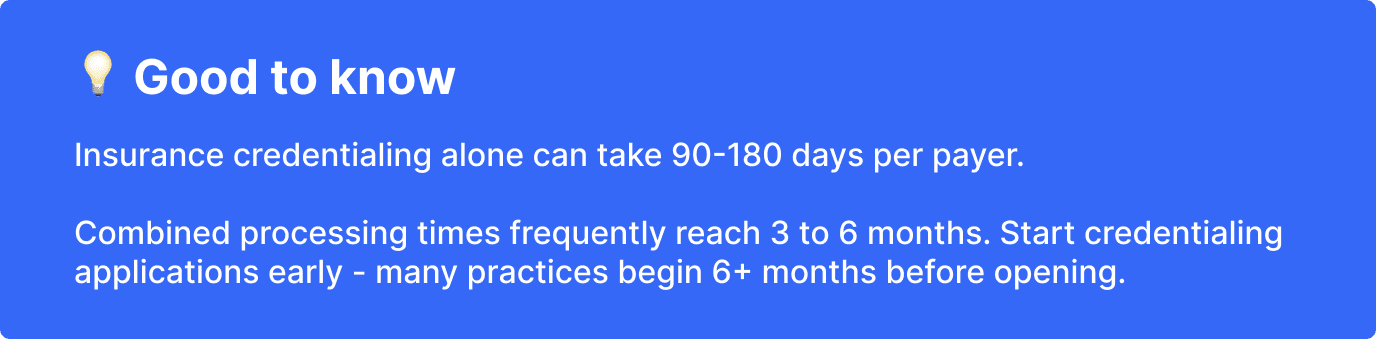
- Submit applications to major payers (Blue Cross Blue Shield, UnitedHealthcare, Aetna, Cigna, etc.) - this is often the longest process
- Register your business entity with your Secretary of State and obtain an EIN (Employer Identification Number) from the IRS
- Obtain required state and local business licenses and permits
3. Securing your practice with appropriate insurance
In radiology, financial stakes (expensive technical equipment) and professional risks (high-risk procedures) require solid coverage.
- Medical malpractice insurance (claims-made or occurrence policy) covering interpretation errors or procedural complications - typical coverage: $1M/$3M limits
- Commercial property insurance (fire, theft, equipment breakdown) adapted to your equipment value
- Business owners policy (BOP) combining general liability and property coverage.
At the end of this step, your structure is legally operational and protected, ready for premises search and equipment purchase.
III. Finding the right premises
Premises selection determines both your practice's attractiveness and regulatory compliance. In radiology, technical constraints (surface area, shielding, patient flow) are particularly strict, making this step critical.
The goal is to find a location accessible to patients and prescribers while respecting zoning regulations and controlling real estate costs.
Prioritize:
- A catchment area validated by your market study, with transport/parking access and proximity to referring physicians
- Health Professional Shortage Areas (HPSAs) eligible for incentives - check HRSA Data Warehouse
- Medical office buildings or locations near hospitals/ambulatory surgery centers for referral convenience
IV. Selecting and financing technical equipment
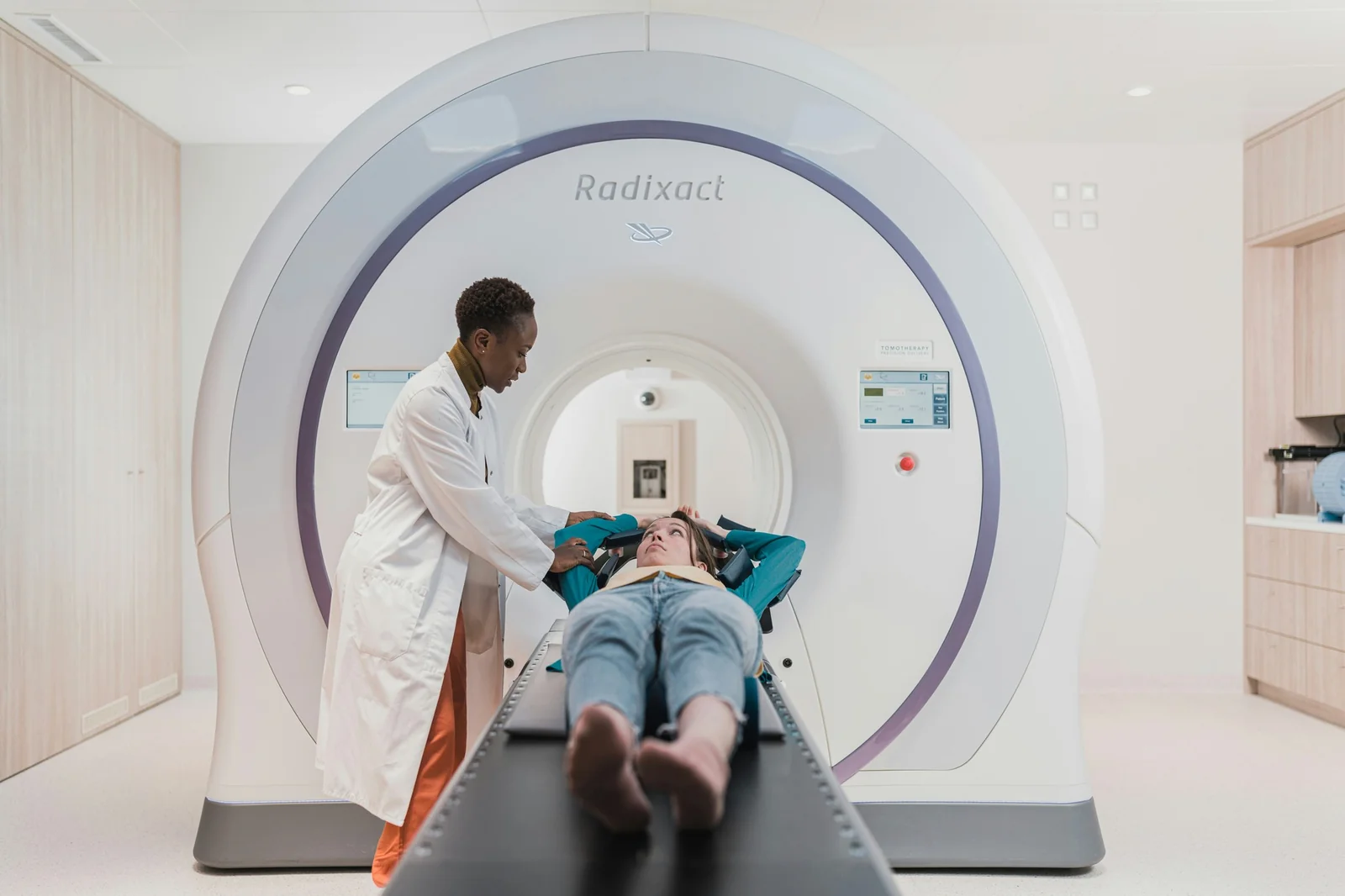
Technical equipment is the main investment in a radiology practice. Machine selection determines exam types offered, financial risk level, and required team size.
1. Defining equipment aligned with your project
The goal is to align your technical platform with local demand and medical positioning, without over-investing at opening.
| Equipment | Primary Use | Typical Positioning | Indicative Price (new) |
|---|---|---|---|
| X-ray system | Osteoarticular assessment, chest, trauma | Proximity practice | €80-150k |
| Ultrasound | Abdominal, pelvic, Doppler, thyroid | Proximity/specialized practice | €50-120k |
| Mammography | Breast screening and monitoring | Women's imaging | €120-200k |
| Dental cone-beam | Dental/maxillofacial imaging | Strong dental patient base | €100-180k |
| CT scanner | Emergency/specialized imaging | Imaging center/group | €300k-800k |
| MRI | Neuro, spine, musculoskeletal | Heavy center | €1-2M |
2. Anticipating financing options
The amounts involved justify consideration of:
- Cash purchase/credit for equipment <€200k
- Leasing/rental for CT/MRI (5-7 year terms) via specialized manufacturers
- Pooling in SCM/imaging center to share costs
At the end of this step, your project is quantified and financeable, ready for pricing and operational organization.
V. Setting rates and managing profitability
Radiology pricing involves multiple payers with different reimbursement rates. Understanding your revenue mix is essential for profitability.
Understanding medicare, insurance, and CPT coding
Imaging reimbursement is based on the Medicare Physician Fee Schedule (MPFS), with private insurers typically paying 150-250% of Medicare rates.
Key steps:
- Identify CPT codes for your procedures via AMA CPT lookup (chest x-ray 71046 → ~$40 Medicare; abdominal CT 74150 → ~$200 Medicare)
- Check your Medicare rates via CMS Fee Schedule
- Private payer contracts: Rates are negotiated separately with each insurer - accept contracted rates when credentialed
- Self-pay rates: Set competitive cash prices (often 30-50% discount for immediate payment)
Focus on volume, efficient operations, proper coding, and transparent self-pay pricing to maximize revenue.
VI. Organizing the practice and managing call volume
1. Building your core team
The goal is to have essential skills from day one without oversizing salary costs. You should prioritize recruiting:
- Radiology technicians
- Cleaning staff, to ensure exam room hygiene and ERP standards compliance
- Medical receptionist, or a medical call center solution, for reception, appointment management, and billing
This last position is typically where initial tensions appear.

2. Why phone reception quickly becomes a bottleneck
In radiology, phone pressure builds very quickly. Three main factors explain this :
- 50–80 calls per day for a two-room practice
- 3–5 minutes per call to qualify exams and contraindications
- Calls competing with in-person reception and billing
➡️ Result: 20-30% of calls are missed in the first six months, with direct impact on schedule fill rates and practice profitability.
VII. Medical call center and automation: 2026 solutions
To absorb this workload without excessively increasing payroll, two approaches are commonly used today.
1. Outsourced medical call center (Human)
Human medical call centers rely on remote operators, often available over extended hours. While this model can increase coverage, it typically requires a long onboarding phase to learn imaging-specific protocols.
In practice, error rates are non-trivial: confusion between exam types, insufficient contraindication screening, and inappropriate time slot allocation are common. This is largely due to the fact that operators frequently manage multiple practices across different specialties, making the level of precision required in radiology difficult to maintain.
Finally, this approach comes with a significant cost, while its impact on patient experience remains inconsistent across providers.
2. AI Voice assistants specialized in radiology
AI voice assistants automate appointment scheduling, modifications, cancellations, and patient reminders, while qualifying requests strictly according to your exam protocols. These systems integrate directly with scheduling tools such as Doctolib or RIS, ensuring real-time synchronization.
Available 24/7, AI receptionists are able to handle 70–80% of standard incoming calls, significantly reducing pressure on in-house staff. Compared to human call centers, they offer lower operating costs and much faster deployment, typically within 2 to 4 weeks.
If you're interested in this solution, book a demo with one of our experts to see how Vocca can help you transform your front-desk.
Conclusion
By working through market analysis, legal structuring, equipment selection, and operational organization, you’ve laid the foundations for a sustainable and efficient practice. In 2026, mastering not only imaging quality but also patient access, scheduling, and call management is a key differentiator.
You’ve done the hard work! Now it’s time to open your doors, and let your practice shine.
More articles to explore.