
New York, October 6, 2026 – Vocca, the AI platform medical practitioners rely on to speak with their patients, announces a $20 million Series A led by Norrsken VC, with participation from Heal Capital, Speedinvest and Firstminute Capital, and angel investors including the founders of Alan and Datadog. Total funding to date is $25 million.
Vocca's specialized AI agents handle over one million patient interactions a month, end to end, across more than 20 medical specialties.
Vocca leads with national deployments as the category matures
Vocca's first product is an AI phone assistant that picks up phone calls and automates them. A year ago, at its seed round, 2,000 medical practitioners used it. Today 15,000 do, across 1,500 practices and twenty specialties in the United States and Europe. Over the same period, conversation volume grew 10x, now exceeding one million a month from inbound calls alone, and revenue grew 7x.
On average, Vocca resolves 70% of conversations end to end with no human involvement; its most mature customers exceed 85%. National groups run their scheduling on it: DAG Dental (37 practices), Point Vision (67 ophthalmology practices), Résonance Imagerie (60 imaging centres), and hospital systems such as the Hôpital Fondation de Rothschild, which handles intake, calls and confirmations with Vocca for its 350,000 yearly patients.
AI that understands how medical practices actually work
Four in ten calls to a medical practice go unanswered. Nearly half of health workers report frequent burnout, up from a third in 2018. Practices turned to AI and found generic tools didn't know their rules. Vocca learned each specialty's scheduling logic, integrated with the software practices already used, and was built to handle patient data securely.
“Practices don't ask us about price. They ask how fast we can deploy and how we handle their edge cases,” said Eliott Hoffenberg, CEO and co-founder. “Doctors want an AI that works like their best scheduler, follows the rules of their specialty to the letter, and fills more appointments without compromising on quality.”
Vocca understands the difference between hundreds of medical exams and steers each patient to the right one. Behind the voice is a scheduling engine with a library of specialty-specific models that encode these rules, so practices go live in days rather than months.
Practices trust Vocca to run their schedule
“Vocca resolves more than 75% of calls fully autonomously: booking appointments, answering questions about exams, consultation preparation, and administrative requests,” said Charlotte Cardin-Taillia, Deputy General Director of Hôpital Fondation de Rothschild. “For the remaining quarter, the AI immediately transfers urgent calls to the front-desk staff and calls back complex, lower-priority requests. Teams can then focus on the patients who truly need to speak with a person.”
“We tested a handful of AI tools across different offices. Vocca was the clear winner, and we rolled it out across the group,” said Opal Anderson, Chief Operating Officer at DAG Dental. “It absorbs the volume and the repetition. Our teams keep the judgement calls, they've gained back hours a day, and our patient satisfaction has never been higher.”
The second wave of healthcare AI is conversational
Healthcare's fragmentation has kept software out for decades, and a quarter of US health spending still goes to administration, much of it on the phone. The first wave of AI in medicine was documentation: in a few years, ambient scribes became standard. The second wave is conversational, and it moves faster because it asks no one to change how they work. Patients keep calling; staff keep their tools. What changes is capacity.
Vocca's thesis is that the conversation is the interface and the scheduling engine behind it is the infrastructure, both built for healthcare's real constraints.
“We've rarely seen customer love like this in healthcare. After speaking with Vocca's customers, we knew we had to back this company,” said Alexander Danielsson, General Partner at Norrsken VC. “The team's vision goes far beyond phone calls. They're building the healthcare experience every patient wishes they had.”
What the funding will go towards
Vocca will use the funding to build the best scheduling infrastructure in healthcare and the best interface for patients to reach it: new channels beyond voice, more specialties and more complex scenarios, and a deeper presence in the United States. The North Star is clear: remove the friction between a patient and care, so that every one of them gets through to the right slot, the right preparation and the right care.
***
About Vocca: Vocca is the AI platform transforming access to healthcare. Founded in July 2024 by Eliott Hoffenberg and Hugo Danet, the company handles more than a million patient interactions a month and is live in 1,500 practices across twenty specialties, for dental, ophthalmology, medical imaging, general practice and private hospital groups in the United States and Europe. Vocca has raised $25M to date.
Vocca runs separate production environments: data is hosted in the United States for American customers and in the EU for European ones. Its infrastructure partners are SOC 2, ISO 27001 and HDS certified. Vocca is built to meet HIPAA requirements and operates as a HIPAA Business Associate.
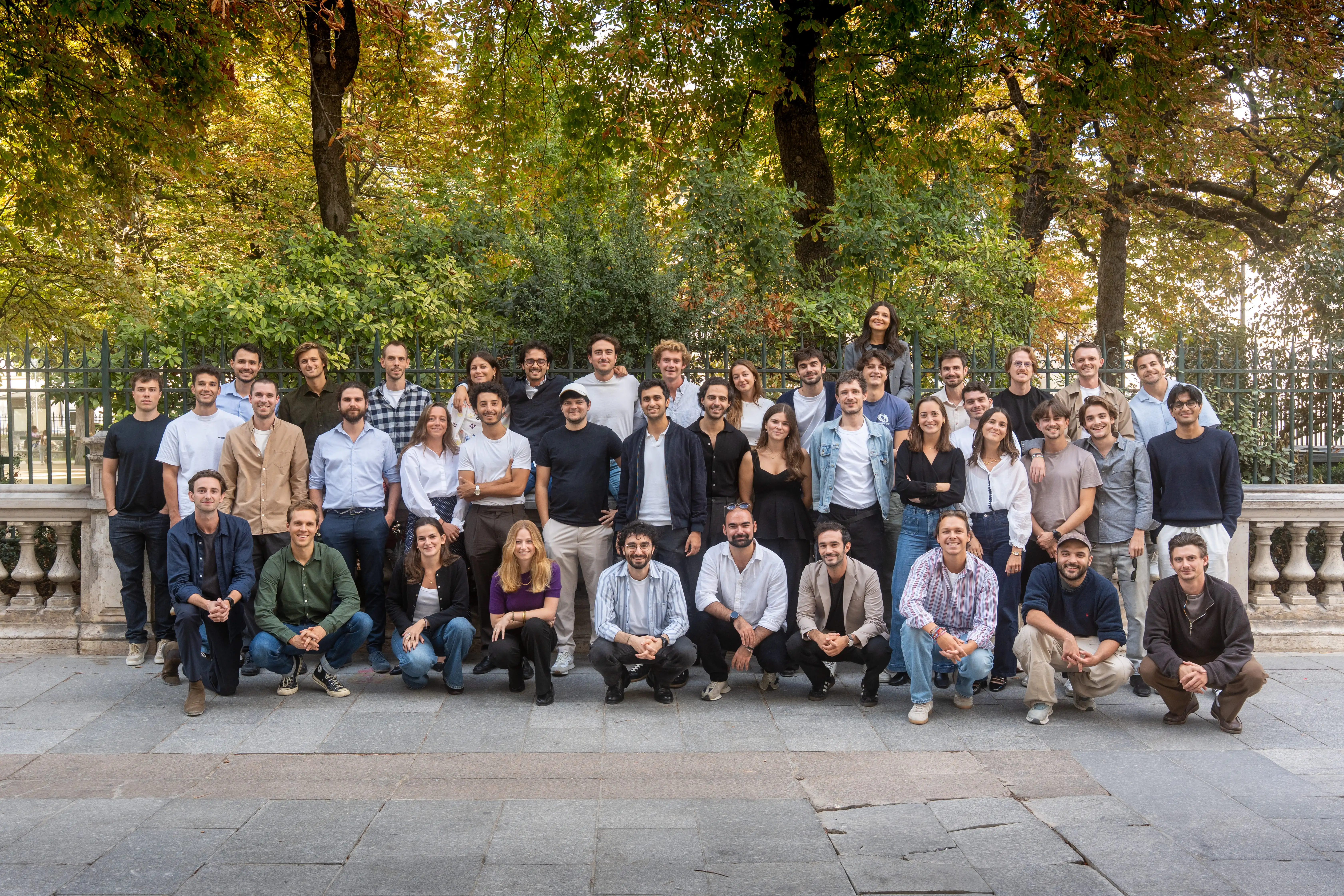
The company employs around 40 people in New York and Paris and is hiring 40 more across both by the end of the year.
Press contact: press@vocca.com
Careers: vocca.com/careers
About Norrsken VC: Norrsken is an impact-driven fund that makes big bets in healthcare and biotech, and it is backing a thesis Vocca has spent two years proving: healthcare does not get automated by general-purpose AI, it gets automated by a vertical player able to build inside healthcare's actual constraints. Learn more at www.norrsken.vc.
Sources and data
- World Health Organization, Global Health Expenditure Report 2023. Global health spending reached $9.8 trillion in 2021, or 10.3% of global GDP.
- Oliver Wyman, How to reduce administrative costs in healthcare, January 2025. Administrative costs accounted for 25% of total US health expenditures from 1999 through 2019.
- Medical Group Management Association, MGMA Stat poll, September 2022, 673 responses. Staffing was named the greatest challenge by 58% of medical groups, ahead of expenses at 20% and revenue at 17%.
- Medical Group Management Association, survey of 359 provider group executives, August 2022. 87% had faced administrative staffing challenges in the previous twelve months.
- US Centers for Disease Control and Prevention, Vital Signs, October 2023, from the General Social Survey Quality of Worklife Module. 45.6% of health workers reported feeling burnout often or very often in 2022, against 31.9% in 2018.
- TrackableMed, The Shocking Truth About Missed Calls in Medical Practices, 2023. Across 7,000 calls to 22 US medical practices in 18 states, 42% of incoming calls went unanswered during business hours.
More articles to explore.